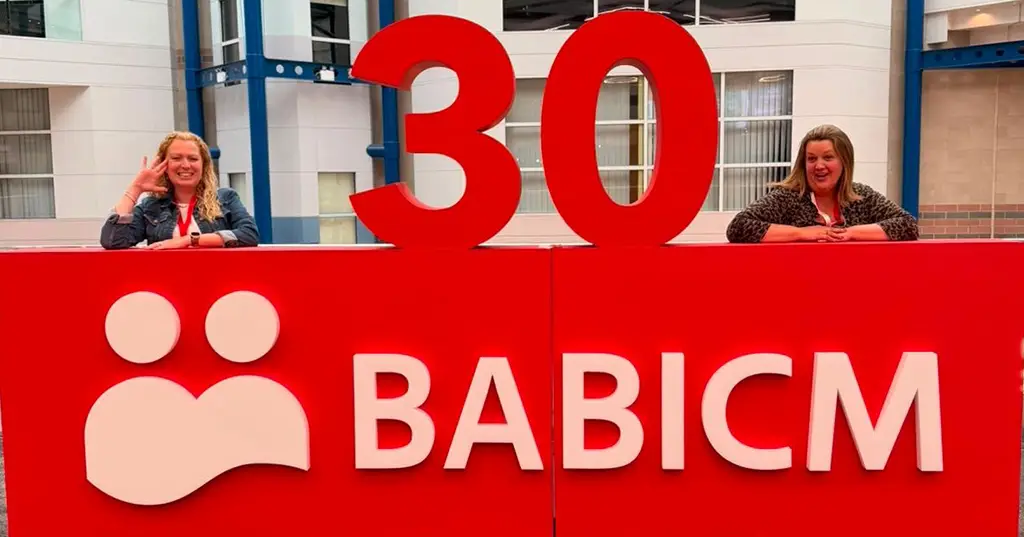
The BABICM Annual Conference brings together professionals working across brain injury and complex case management to examine the issues shaping day-to-day practice. Arbor’s Kesta Purt and Sarah Gibbin attended the 2026 event, joining two full days of learning and reconnecting with valued colleagues and friends.
Held at the ICC Birmingham on 2 and 3 June, the conference marked BABICM’s 30th anniversary. Its theme, What’s That Coming Over the Hill?, looked towards the legal, clinical and technological developments that professionals may need to navigate next.
Across the programme, four very different sessions stood out. Together, they showed why effective neurorehabilitation depends on professionals remaining curious, sharing knowledge and considering each person’s wider circumstances.
Legal change and its clinical implications
Ian Brownhill spoke about the UK Supreme Court’s ruling on the meaning of deprivation of liberty and how its implications may unfold in clinical roles over the coming weeks and months.
For clinicians and case managers, developments of this kind sit at the meeting point between legal principles and everyday decisions about care and support. The session underlined the importance of professionals staying alert to legal change, considering its relevance to clinical practice and recognising when specialist advice may be needed.
Communication, relationships and funding
Nicholas Behn raised awareness of cognitive communication disorder and the importance, as well as the complexity, of assessing and supporting clients’ relationships and intimacy. This is a valuable reminder that communication affects far more than the exchange of practical information. It can influence identity, connection and participation in personal relationships.
Heledd Wyn brought a different perspective, sharing her knowledge of care and health funding issues and discussing when professionals should seek guidance from their legal team. Funding decisions can have a significant influence on how support is planned and sustained, making it important for clinical and legal professionals to understand where their responsibilities meet and when additional expertise is required.
AI voice generation and values-based rehabilitation
To bring the programme’s themes together, Ellis Parry, Stephanie Edwards and Amber Masterson delivered a future-focused case presentation about AI voice generation and the importance of values-based rehabilitation.
The pairing is significant. Emerging technology can introduce new possibilities, but its use still needs to be considered in the context of the individual, their goals and the values guiding their rehabilitation. The presentation connected innovation with the human decisions that give rehabilitation its direction, rather than treating technology as an end in itself.
This reflects Arbor’s broader commitment to person-centred, coordinated neurorehabilitation. Its clinicians work across psychology, speech and language therapy, occupational therapy, physiotherapy and rehabilitation assistance, with disciplines brought together where a person’s needs require an integrated response.
Learning and professional connection
It was a full and energising two days. Alongside the programme itself, the event provided time to catch up with colleagues and friends from across the field. That combination of formal learning and professional connection is part of what makes conferences such as BABICM useful: new ideas can be considered alongside the practical experiences of people working in different roles.
The sessions raised questions about law, communication, relationships, funding and technology that require thoughtful, collaborative practice. Arbor will continue to engage with those conversations as part of its work with clients, families and professional teams. Referrers seeking coordinated support can discuss a complex neurorehabilitation referral with Arbor.